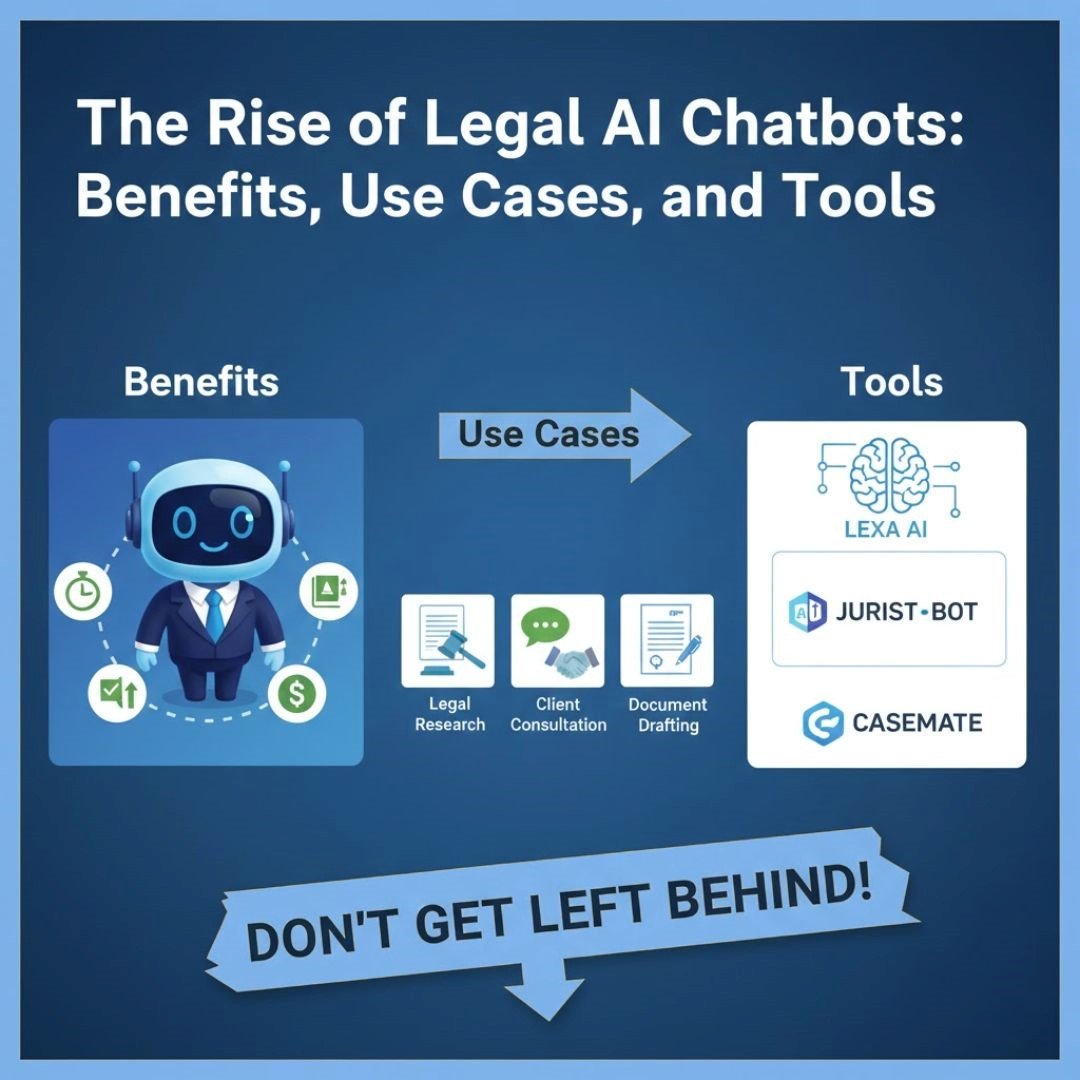
The Rise of Legal AI Chatbots: Benefits, Use Cases, and Tools
Legal work is information-heavy, time-sensitive, and client-driven. Firms operate in an environment where information moves quickly, and expectations are high. Clients want answers early, often before they are ready to sign an engagement letter. They want clarity on process, timelines, and costs. They also want confidence that their questions are being handled with care and accuracy.
At the same time, firms face real constraints. Senior professionals spend large parts of their day responding to similar enquiries, explaining standard procedures, or guiding people to the right documents. None of this work is unimportant, but much of it is repetitive and non-billable. Add strict confidentiality requirements and the risk of miscommunication, and the pressure becomes clear.
This is where using an AI chatbot in legal and consultancy settings begins to feel practical. It is not meant to replace legal judgment or professional advice. Instead, it works as a structured assistant that helps manage information, sets clear expectations early, and supports both clients and internal teams while respecting professional boundaries.
Legal AI chatbots are gaining attention because they address a practical problem. Firms need better ways to handle growing enquiry volumes while protecting quality and trust. When implemented carefully, chatbots can sit at the front of the operation, handling information access so professionals can focus on analysis, strategy, and client outcomes.
Why Legal and Consultancy Firms Are Turning to AI Chatbots
The interest in chatbots did not appear overnight. It came from ongoing day-to-day pressure that many firms deal with quietly behind the scenes.
Several factors are driving adoption:
- A consistent increase in early client enquiries via websites, email, and social channels
- The same questions were asked repeatedly about services, onboarding, timelines, and fees
- Not enough staff time for discussions that do not move work forward
- Clients wanting answers outside regular business hours
These problems show up across firms of all sizes. Smaller firms feel the capacity limits sooner, while larger firms face challenges keeping communication consistent across teams and locations. An AI chatbot for business use in a legal setting offers a way to handle these front-line interactions without adding headcount.
Importantly, firms are not adopting chatbots because they want to automate legal work. They are adopting them because they want to manage information better. A well-designed chatbot can explain how an engagement works, collect basic intake details, and guide users to the right resources. This reduces noise and helps human teams spend their time where it matters most.
What Legal AI Chatbots Can and Cannot Do
Clear boundaries are essential when introducing AI into legal or consultancy environments. The most successful implementations are explicit about what chatbots are designed to handle and what they are not.
Legal AI chatbots perform well when dealing with structured, repeatable information. They can ask intake questions, explain firm processes, outline service categories, and point users to relevant policies or documents. They are especially effective at answering common questions consistently, without fatigue or variation.
However, there are strict limits. Chatbots should not provide legal advice. They should not interpret facts of a case, assess risk, or suggest decisions. These tasks require professional judgment, context, and accountability. Any system that blurs this line introduces risk rather than reducing it.
This distinction builds trust. Clients are reassured when a chatbot clearly states its role and knows when to direct them to a human professional. Internal teams also gain confidence that the tool supports their work instead of undermining it. In legal environments, credibility comes from restraint as much as capability.
Practical Use Cases Across Legal and Consultancy Services
When used with care, chatbots blend smoothly into daily legal and consultancy work. Their usefulness shows up most clearly in real, everyday situations where information needs to move quickly and accurately.
Common applications include:
- Client intake and early screening through guided questions
- Explaining services and engagement steps in clear, simple language
- Directing users to relevant documents, policies, or public resources
- Supporting internal teams with fast access to firm knowledge
Handling common questions about billing, timelines, and procedures
For instance, a potential client visiting a firm’s website after office hours can use a chatbot to understand which services may apply and what details to prepare for an initial conversation. Inside the firm, a junior team member can check a standard process without pulling a senior colleague away from active work.
These are not flashy applications. They are practical. They show how an AI chatbot in legal and consultancy contexts acts as connective tissue between information and people. Over time, this improves responsiveness and reduces friction across the organization.
More than Benefits: Where the Real Value Comes From
It is easy to describe chatbots as time-saving tools, but that framing misses the deeper impact. The real value comes from how they change the flow of work and communication.
Senior professionals experience fewer interruptions for routine questions. This protects focus and reduces context switching. Clients receive consistent information, regardless of when or how they ask. This consistency builds trust and avoids misunderstandings that can arise from informal explanations.
Internally, knowledge becomes easier to access. Instead of relying on who remembers what, teams can query a shared source of approved information. This supports onboarding, reduces errors, and creates a more resilient operation.
In this sense, chatbots function as support infrastructure. They sit quietly in the background, making the organization smoother and more predictable. Firms that recognize this tend to get more value than those chasing automation for its own sake.
Choosing the Right Tools for Legal AI Chatbots
Selecting tools for legal AI chatbots requires a cautious and informed approach. Not all platforms are suited to professional services, and the wrong choice can create more risk than benefit.
Key considerations include knowledge, accuracy, and control. Firms must know exactly what information the chatbot uses and where it comes from. There should be clear permissions, especially when internal knowledge is involved. Transparency matters. Teams should be able to understand how answers are generated and update content easily as laws, policies, or services change.
Some platforms, such as GetMyAI, are often referenced because they emphasize controlled knowledge use instead of open-ended replies. The exact tool is less important than the principles it follows. Accuracy, control, and accountability should guide every choice.
AI Chatbots as Assistive Tools, Not Legal Substitutes
Legal AI chatbots are becoming more common because they solve a real operational challenge. They help firms handle information in a way that supports professional standards and meets client expectations.
The firms seeing the most success are clear about one thing. Chatbots support legal and consultancy work; they do not replace expertise. They handle information, not judgment. They prepare conversations, not conclusions.
When implemented thoughtfully, AI chatbots improve efficiency, strengthen first impressions, and give professionals more space to focus on complex work. For decision-makers, the question is no longer whether these tools belong in legal environments. It is how carefully and responsibly they are integrated into the fabric of the firm.