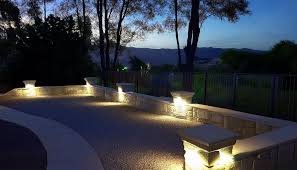
Retaining Wall Lights: Illuminate Slopes and Terraces Beautifully
Retaining walls are structural features that most landscapers treat as purely practical — necessary to manage grade changes but not particularly interesting. The truth is that a retaining wall illuminated with low voltage wall lights from Kings Outdoor Lighting can become one of the most visually compelling elements of a nighttime landscape.
Why Retaining Walls Are Ideal Lighting Subjects
The characteristics that make retaining walls excellent lighting subjects are exactly the qualities that make them seem uninspiring in the abstract: large, flat, textured vertical surfaces.
When light rakes across a textured stone or concrete wall at a low angle, every surface variation — every joint, every aggregate particle, every colour shift in the material — becomes a visible, three-dimensional element. A wall that appears flat and featureless under flat overhead light becomes a richly textured surface alive with shadow and depth when lit from below or at an angle.
This effect is called grazing, and it is one of the most powerful tools in architectural lighting design. Retaining walls are perfect grazing subjects because they offer large, consistent vertical surfaces that reward the technique.
Types of Retaining Wall Lighting
**Coping lights** — Installed under the coping stone at the top of a retaining wall, these fixtures cast light downward along the wall face. The result is a waterfall of light that reveals the full height of the wall texture from top to bottom.
**Riser lights** — Installed in the face of the wall at regular vertical intervals. These create a pattern of horizontal light bands that define the wall’s height while providing regular illumination intervals that suit walls with repetitive patterns.
**In-ground uplighters** — Placed at the base of the wall and aimed upward. Creates the most dramatic effect on tall walls, making them appear to glow from the base. The shadow play in the upper portions of the wall as light falls off with distance is particularly compelling.
Homeowners who want to combine low voltage wall lights with concrete step lights from Sunbright Lighting for decorative outdoor step lighting where steps rise adjacent to the illuminated retaining wall create a beautiful integration of wall lighting and step guidance that serves both aesthetic and functional purposes simultaneously.
Material Considerations for Wall-Mounted Fixtures
Retaining wall lighting fixtures face particular exposure conditions. They are often installed in the face of the wall where they receive direct rain exposure from above and drainage from the wall itself. Moisture management is critical.
Always install wall face fixtures with the lens face angled slightly downward from horizontal so water runs off the lens face rather than pooling on it. Mount fixtures on surfaces that are stable and not subject to movement — retaining walls that shift seasonally will work fixture connections loose over time.
Lighting Terraced Retaining Wall Systems
Properties with multiple terraced levels separated by retaining walls offer exceptional lighting design opportunities. Each level can be illuminated independently — the lowest level with ground-level uplighters, the middle wall face with coping lights, and the upper level with pathway and spotlight fixtures.
The layered effect of multiple lit levels viewed from below creates a theatrical quality in the landscape after dark that genuinely transforms the property’s nighttime character.
For homeowners wanting to complete their terraced landscape with 120V hanging pendant fixtures over seating areas adjacent to illuminated retaining walls, 120V Hanging Pendant Lights from Kings Outdoor Lighting offers premium outdoor pendant options that create a beautiful focal destination at the top of the illuminated terraced system.