How to Make a Small Kitchen Look Bigger: Design Tips
To make a small kitchen look bigger, prioritize a light-reflective color palette, minimize visual “stops” like heavy hardware or dark cabinetry, and use seamless flooring that draws the eye toward the corners of the room. Combining high-gloss materials with strategic lighting and open shelving creates an optical illusion of depth. Shopping for tiles online gives you access to reflective finishes that maximize light bounce. The goal is to maximize every square inch of vertical and horizontal space so that the boundaries of the room feel like they are receding rather than closing in.
How do light colors help make a small kitchen look larger?
Light colors are the most effective tool for expanding a room visually because they have a high Light Reflectance Value (LRV). While dark colors absorb light and make walls feel closer, whites, creams, and light grays reflect both natural and artificial light. When the light bounces around the room, it blurs the edges where the walls meet the ceiling, creating an airy atmosphere.
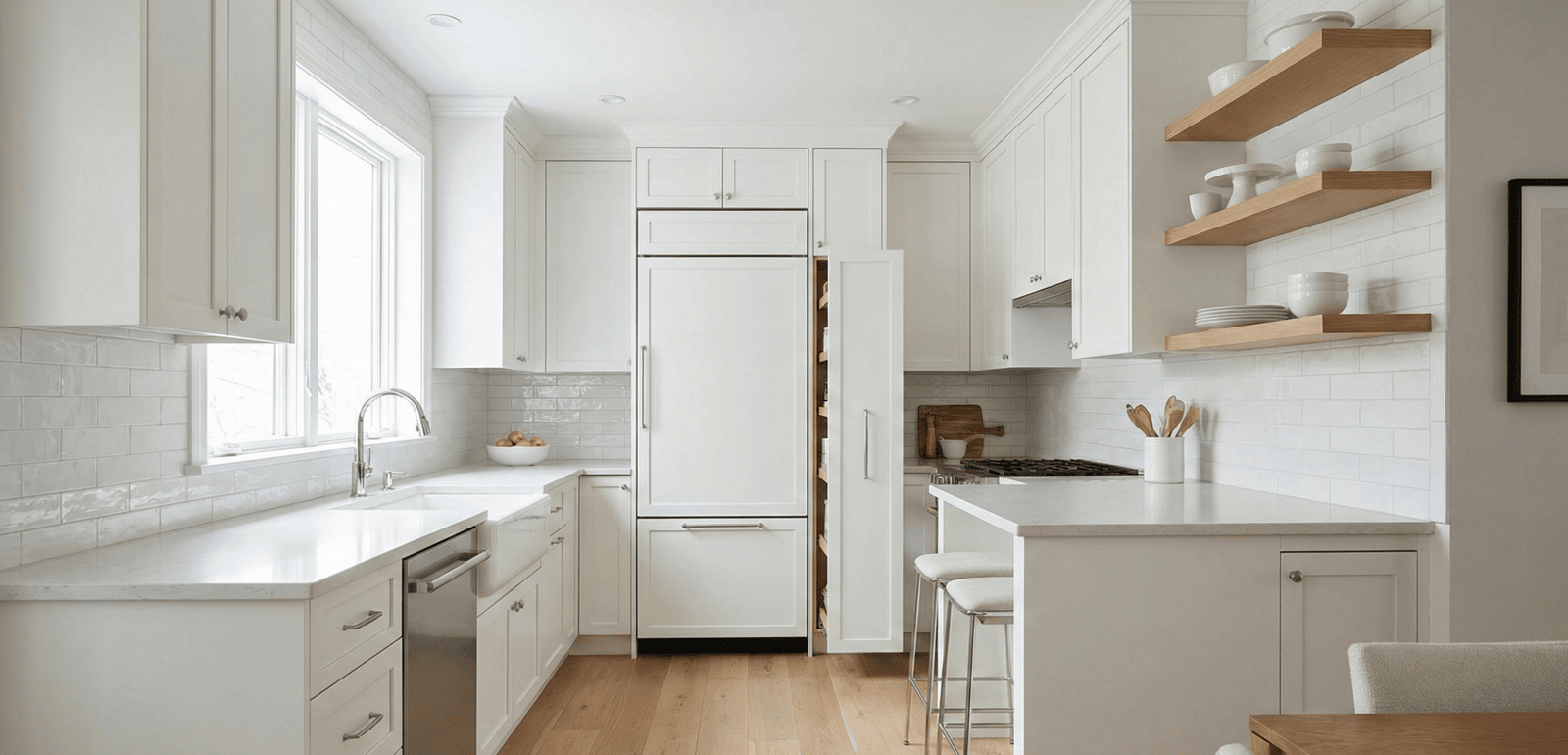
To truly master how to make a small kitchen look bigger, you should apply these light tones not just to the walls, but also to the cabinetry and countertops. A monochromatic look—where the cabinets match the wall color—prevents the eye from seeing a “break” in the space. This seamless transition is a classic designer trick to make a 50-square-foot galley feel like a much larger gourmet kitchen.
What are the best cabinet colors for small kitchens to increase space?
The best cabinet colors for small kitchens are almost always found in the neutral family. Bright white is a staple because it blends into white walls, effectively making the cabinets “disappear.” However, if you want more character, light oak, soft sage, or pale blue can also work if they are paired with a very bright backsplash.
Another strategy is to use “two-toned” cabinets. By painting the lower cabinets a slightly darker shade and the upper cabinets a crisp white, you ground the room while making the top half feel open and light. This draws the gaze upward toward the ceiling, emphasizing height over a narrow floor plan. Avoid dark wood stains or matte black finishes on upper cabinets, as these act as heavy visual weights that shrink the room’s perceived volume.
How can backsplash and floor tiles create an illusion of depth?
The surfaces you choose for your backsplash and floor can either “trap” the eye or guide it. To make the space feel expansive, look for tiles that offer a glossy or iridescent finish. These act like mini-mirrors, reflecting the kitchen’s activity and light.
Using beige and cream tiles on the floor is a brilliant move because these tones stay within the “light and airy” rule while being practical for a high-traffic area. Mineral Tiles (one of America’s top-selling tile brands) carries a wide range of these neutral options in various sizes and finishes. Furthermore, the way you lay the tile matters. Laying tiles in a diagonal or herringbone pattern creates long lines that trick the brain into thinking the floor is wider than it is. When the flooring is consistent and light, it pushes the walls outward, which is a core component of how to make a small kitchen look bigger.
Why is a cohesive color palette essential for small spaces?
A fragmented color scheme is the enemy of a small kitchen. If you have a dark floor, red walls, and wood cabinets, the eye is constantly jumping from one “segment” to another, which highlights how small the space actually is.
By understanding how to choose a color palette for your home, you can create a flow where the kitchen feels like a part of the larger living area. If the colors in your kitchen complement the colors in your dining or living room, the visual boundaries disappear. This “open-concept” feel is vital when you are trying to solve the problem of how to make a small kitchen look bigger. A unified palette makes the kitchen feel like a spacious extension of your home rather than a cramped, isolated box.
What small kitchen colors ideas work best for a modern look?
Modern design thrives on minimalism, which is perfect for small kitchens. The best small kitchen colors ideas for a modern aesthetic include “cool” tones like icy blue, light gray, or even a soft “greige.” These colors feel crisp and clean.
To add interest without adding clutter, use texture instead of color. For example, instead of a brightly colored backsplash, use a white 3D textured tile or a marble-look tile with very light veining. This provides visual depth and a premium feel without the “heaviness” that dark or bold colors bring into a small footprint.
How do open shelving and glass doors impact the kitchen size?
Bulky, solid cabinet doors can feel like walls closing in on you. To make the kitchen feel larger, consider replacing a few upper cabinet doors with glass inserts. Glass provides a “window” into the cabinet, adding several inches of visual depth because the eye travels all the way to the back wall of the cabinet.
Alternatively, open shelving is a major trend in how to make a small kitchen look bigger. By removing the cabinet boxes entirely, you open up the “air space” at eye level. This makes the walls feel further back. Just remember to keep the shelves organized; clutter is the fastest way to make a large kitchen feel small, and a small kitchen feel tiny.
Conclusion
Learning how to make a small kitchen look bigger boils down to controlling light and movement. By selecting the best cabinet colors for small kitchens, utilizing reflective tile finishes, and maintaining a cohesive color palette across your home, you can turn a cramped area into a bright, functional masterpiece. Focus on light, keep the counters clear, and use your floors and walls to create long, uninterrupted lines of sight.
FAQs
How do you make a small kitchen look bigger with lighting?
Layered lighting is key. Use recessed “can” lights in the ceiling for general brightness, but add under-cabinet LED strips to brighten the countertops. This removes the dark shadows under the cabinets that usually make a kitchen feel narrow and dim.
Does a large rug make a small kitchen look larger?
Actually, it’s usually better to leave the floor visible or use a runner that emphasizes the length of the room. A large rug can “cut” the floor into sections, which makes the room feel smaller. If you do use a rug, ensure it is a light, neutral color.
What is the best layout for a small kitchen?
A galley layout (two parallel counters) or an L-shape layout is usually best. These layouts maximize the “work triangle” while keeping the center of the room open for movement, which is essential for making the kitchen feel larger.
Should I use small or large tiles for a tiny kitchen floor?
Large tiles (like 12×24 or 24×24) are actually better for making a small kitchen look larger. Fewer grout lines mean less visual “clutter” on the floor, creating a smoother, more expansive surface.
Can mirrors be used in a kitchen?
Yes! A mirrored backsplash or even a large mirror on an accent wall can instantly double the visual space of a kitchen. It’s one of the oldest and most effective tricks in the book for making any small room feel huge.
How does clutter affect the size of a kitchen?
Clutter is a “visual weight.” Every appliance on the counter and every magnet on the fridge acts as a distraction that makes the room feel “full.” To make your kitchen feel larger, keep your countertops as empty as possible.