
How to Maintain Your Floor Sofa for Long-Term Use
Maintaining a floor sofa comes down to three simple habits: regular cleaning, protecting it from sunlight, and keeping the cushions properly supported.
Because floor sofas sit directly on the ground, they collect dust faster and their cushions lose shape more easily than raised furniture. Without a proper care routine, wear shows up quickly.
At Made Minimal, we’ve worked with floor seating long enough to know what actually keeps it in good shape. This guide covers how to clean, protect, and support your floor sofa so it stays comfortable for years.
Before getting into the steps, let’s first look at why regular maintenance pays off.
Why Floor Sofa Maintenance Actually Pays Off
A floor sofa that gets basic care regularly will last significantly longer than one that doesn’t. That’s because sofas don’t break down suddenly. Dust, UV exposure, and unrotated cushions wear down fabric and foam gradually, and small habits prevent that damage from building up.
You don’t have to do anything complicated. A quick vacuum, a wipe-down, and rotating the cushions every few weeks is usually enough to stay on top of it.
Routine Cleaning: The Backbone of Floor Sofa Maintenance
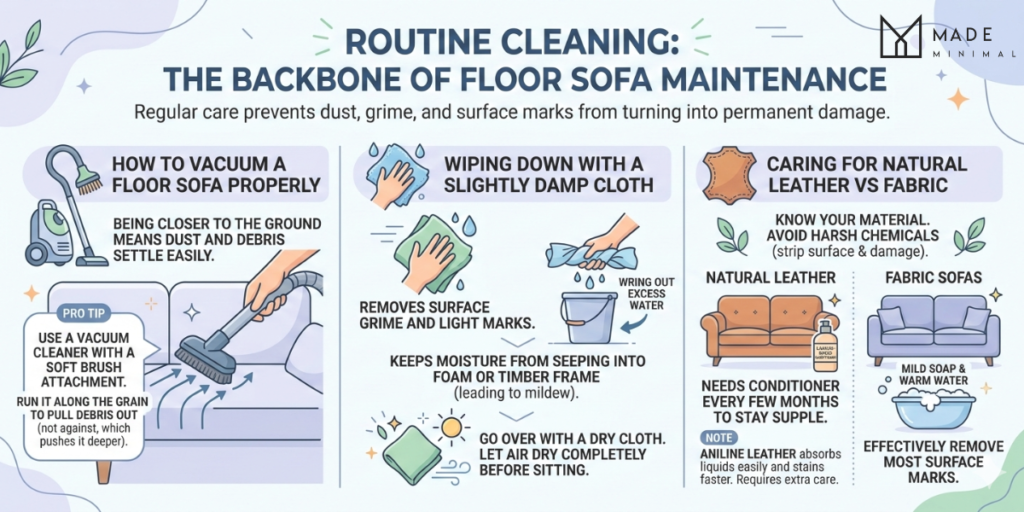
Regular cleaning prevents dust, grime, and surface marks from turning into permanent damage. For most floor sofas, that means three things: vacuuming, wiping down, and material-specific care.
How to Vacuum a Floor Sofa Properly
Being closer to the ground means dust and debris settle into the base and sides of a floor sofa more easily. Regular vacuuming prevents debris from settling deep into the fibres, making it much easier to clean later.
Pro tip: Use a vacuum cleaner with a soft brush attachment and run it along the grain, because going against it pushes debris deeper instead of pulling it out.
Wiping Down With a Slightly Damp Cloth
Vacuuming removes loose debris, but surface grime and light marks need a slightly damp cloth to lift them properly. A microfibre cloth works best here as it picks up residue without scratching the surface. Just be sure to wring out any excess water beforehand to keep moisture from seeping into the foam or timber frame, which can lead to mildew.
Once you’re done wiping, go over the sofa with a dry cloth and let it air dry completely before sitting on it again.
Caring for Natural Leather vs Fabric
Not all sofas clean the same way, and using the wrong product can do more damage than the stain itself. Natural leather, for example, needs a lanolin-based conditioner every few months to stay supple.
Aniline leather, on the other hand, absorbs liquids easily and stains faster than other leather types, so it requires extra care. For fabric sofas, mild soap and warm water remove most surface marks effectively. Either way, avoid harsh chemicals, as they strip the surface and cause damage that’s hard to fix.
How to Handle Spills Before They Set
When a spill happens, blot it immediately with a clean cloth before the liquid soaks into the foam beneath. Follow these steps to remove the spill completely:
Step 1. Act Fast
As soon as you notice a spill, take a clean cloth or paper towel and press it gently into the fabric to soak up as much liquid as possible. Avoid rubbing, because it can spread the stain sideways and push it deeper into the cushion.
Step 2. Treat the Stain
Dip a soft sponge into warm, soapy water and work it gently over the stained area. When the residue starts to lift, wipe it away with a clean, lint-free cloth and dry the area immediately so moisture doesn’t sit in the fabric.
Step 3. Tackle Stubborn Stains
If a stain persists after basic spot cleaning, a pH-neutral upholstery cleaner works well on fabric sofas. For food or pet accidents, using an enzyme-based cleaner is especially effective. It breaks down the stain at the source rather than just lifting it off the surface.
Pro tip: When choosing a cleaner, look for one labelled pH-neutral or fabric-safe. Products with bleach or strong solvents can damage fibres and fade colour, so always check labels before using anything new on your sofa.
Protecting Your Floor Sofa From Sunlight and Everyday Wear
Prolonged exposure to sunlight is one of the most damaging factors for a floor sofa. It fades fabrics and dries out leather over time, dulling the colour and eventually causing the surface to crack. To protect your sofa, keep it out of direct sunlight and use sheer curtains to reduce exposure without darkening the room.
Heat sources like radiators and air conditioners can have a similar drying effect, so keep your sofa a safe distance away. For everyday use, avoid leaving sharp or hot objects on the surface. It’s because scratches and heat marks can be difficult to remove and build up quickly.
Stop the Sag: Maintaining Cushion Shape for Long-Term Comfort
Cushions often sag because pressure isn’t distributed evenly. Floor sofas take more direct downward pressure than raised sofas, so the spots you sit on most compress faster than the rest. Rotating the cushions every few weeks spreads the wear evenly across the filling, so no single area breaks down before the others.
Fluffing cushions after each use also helps prevent the filling from clumping in one spot. It only takes a moment and keeps that flat, sunken feeling from setting in.
As part of your routine cleaning, check the base and seams for dirt buildup, as it tends to collect there without being obvious. If you spot clean a cushion, let it dry naturally rather than using heat, which can damage the filling.
Can a Floor Sofa Double as a Sofa Bed?
It depends on the configuration. Modular floor sofas can be rearranged into a flat sleeping setup, but standard fixed designs can’t.

If you plan to use a sofa as a guest bed, keep in mind that the cushions will compress faster than with regular sitting. That’s why it’s important to rotate them more often to keep the shape even. A spare removable cover also makes it easier to freshen up between uses without doing a full clean each time.
Keep Your Floor Sofa Looking Great for the Long Haul
With the right habits in place, floor sofa maintenance takes less time than you’d expect. The basics cover most of what you need:
- Vacuum weekly and wipe down with a damp cloth regularly
- Blot spills immediately before they soak through
- Rotate and fluff cushions every few weeks
- Keep the sofa away from direct sunlight and heat sources
Good sofa care isn’t about perfection. It’s about staying on top of the small things before they turn into bigger problems.
If you’re looking for floor seating built to hold up to everyday use, every care tip in this guide applies directly to the sofas at Made Minimal.