8 AI Video Generator Tools for Product and Brand Videos
Product and brand videos have become essential across digital channels—from landing pages and app stores to social media and email campaigns. Audiences now expect polished visuals, clear messaging, and fast storytelling, even from smaller teams. This demand has fueled the rise of AI-powered video creation tools that simplify the entire process, from scripting to final export.
Instead of juggling multiple tools for writing, visuals, voiceovers, and editing, marketers can now rely on intelligent systems that automate much of the heavy lifting. These platforms are increasingly being used to create product explainers, feature launches, demo videos, and brand narratives at scale.
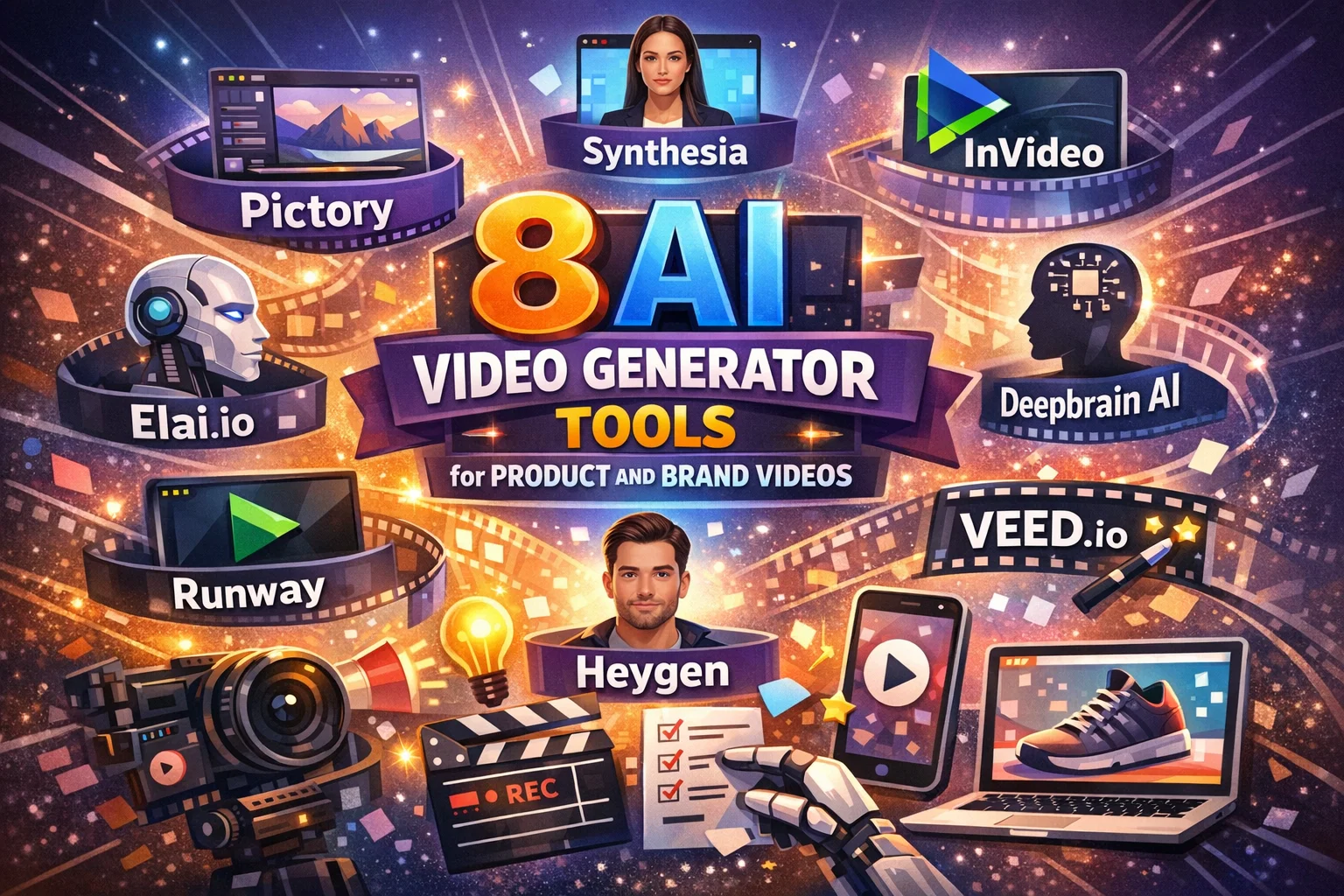
Below is a look at eight AI video generator tools commonly used for product and brand videos, starting with invideo, followed by other popular options in the space.
1. Invideo
Invideo is often positioned as an end-to-end solution for creating product and brand videos without needing advanced editing skills. Its workflow is built around a simple idea: you start with a prompt, and the system handles much of the creative execution.
Using invideo’s AI video generator, creators can describe their video idea in plain language. From there, the platform generates a structured script, selects relevant visuals generated with AI, adds voiceovers, subtitles, and background music, and assembles everything into a cohesive video. This makes it particularly useful for teams that want to move quickly from concept to publish-ready output.
For product marketing, this approach helps translate feature lists into engaging narratives. Brand teams can experiment with multiple messaging angles without starting from scratch each time. While it’s powerful, the tool still leaves room for customization, allowing users to adjust pacing, visuals, and tone to match brand guidelines.
Because of its prompt-based workflow, invideo is often compared to a modern video maker app rather than a traditional editor, especially for users who want speed and consistency over manual control.
2. Runway
Runway is widely known for its advanced AI-driven video capabilities, especially in areas like generative visuals and video editing automation. It is commonly used by creative teams looking to push visual boundaries while still saving time.
For product and brand videos, Runway offers tools that can generate or modify visuals using text prompts, remove backgrounds, and enhance footage with AI-powered effects. This makes it a strong option for brands that want more cinematic or experimental content without relying heavily on post-production specialists.
Runway tends to appeal to users who are comfortable experimenting with visuals and want more control over the final aesthetic, especially for high-impact brand storytelling.
3. Pictory
Pictory focuses on turning long-form content into short, digestible videos. It is often used by marketers who want to repurpose blog posts, product descriptions, or written campaigns into video format.
For brand teams, this is particularly useful when launching products across multiple platforms. A single piece of written content can be transformed into several short videos highlighting different benefits or use cases. The AI assists with scene selection, text overlays, and pacing, helping maintain clarity even in shorter formats.
Pictory works well for brands that prioritize consistency and content repurposing as part of their video strategy.
4. Lumen5
Lumen5 is designed with marketing teams in mind, especially those focused on social media and brand communication. It uses AI to map written content to visual storyboards, making it easier to turn product announcements or brand updates into shareable videos.
The platform emphasizes simplicity and brand alignment. Users can input text, and the system suggests layouts, visuals, and transitions that align with typical marketing formats. This makes it suitable for brands that want quick turnaround times while maintaining a recognizable visual identity.
Lumen5 is commonly used for product teasers, feature highlights, and brand awareness clips.
5. Kapwing
Kapwing blends AI assistance with collaborative video editing features. It’s often used by teams that want a balance between automation and hands-on editing.
For product and brand videos, Kapwing’s AI tools help with tasks like subtitle generation, content resizing for different platforms, and basic visual enhancements. Its collaborative environment allows marketing teams to review, comment, and iterate on videos in real time.
This makes Kapwing a practical choice for brands with distributed teams or agencies working together on product campaigns.
6. Descript
Descript approaches video creation from an audio-first perspective, which is especially useful for product demos, walkthroughs, and brand explainers that rely heavily on narration.
Its standout feature is text-based editing, where users can edit video and audio by simply editing the script. AI-powered voice tools and transcription features further simplify the workflow. For brand teams producing educational or instructional content, this can significantly reduce editing time.
Descript is particularly effective for videos where clarity and messaging take priority over heavy visual effects.
7. HeyGen
HeyGen focuses on AI-driven presenters and automated video creation, making it a popular choice for product walkthroughs and internal brand communications.
For product marketing, it allows teams to quickly generate videos that explain features, updates, or onboarding steps without needing live presenters or recording setups. The AI handles presentation delivery, while users focus on structuring the message.
This tool is often used for scalable communication, especially when the same product message needs to be delivered across regions or languages.
8. Elai
Elai is another platform geared toward turning text into structured video content, often used for product education and brand storytelling. It supports automated scene generation and narration, helping teams produce videos consistently.
For brands, Elai is useful when creating libraries of product videos, such as feature breakdowns, FAQs, or onboarding content. Its AI-driven approach helps maintain uniformity across videos, which is important for brand credibility.
Elai is commonly chosen by teams that want to standardize video production without increasing manual effort.
How to Choose the Right AI Video Generator for Brand Content
With so many tools available, selecting the right one depends on your specific goals. Some platforms prioritize speed and automation, while others offer more creative control. For product-focused videos, it’s important to consider how well a tool translates features into clear, engaging stories.
Brand teams should also think about scalability. If you’re producing videos regularly—across campaigns, regions, or platforms—AI-driven workflows can help maintain consistency while reducing production time.
Ultimately, the best choice is the one that fits seamlessly into your existing marketing process and helps you communicate your product’s value more effectively.
Final Thoughts
AI video generators are no longer just experimental tools—they are becoming a core part of modern product and brand marketing. From quick product explainers to polished brand narratives, these platforms allow teams to create high-quality videos without traditional production bottlenecks.
By understanding what each tool offers and how it aligns with your content goals, you can build a more efficient, scalable video strategy that keeps pace with today’s fast-moving digital landscape.