Is Baking Your Own Sourdough Actually Worth It?
For most people, yes, baking sourdough at home is worth it. It costs almost nothing to start (flour, water, time), produces a loaf better than most you can buy, and the rhythm of it is genuinely satisfying. The catch is patience: a starter takes about a week to build, and baking becomes a small, ongoing ritual rather than a one-off.
Sourdough has quietly become the defining home-kitchen craft of the decade: equal parts flavor, ritual, and quiet luxury. But is it actually worth the flour on your counter and the week of waiting? Here’s the honest answer, question by question.
Why has home sourdough baking become so popular?
Sourdough took off because it delivers craft, flavor, and ritual all at once a rare combination in modern cooking. It turns two cheap ingredients into something genuinely special; it rewards patience in a way that feels like the antidote to instant everything, and the results look and taste artisanal. It’s the slow-food ethos in its most accessible form.
There’s also a tactile, almost meditative pleasure to it. Feeding a starter, shaping a loaf, listening for the crackle of a cooling crust it’s a hands-on antidote to screen time. For a lot of people, that daily rhythm is as much the appeal as the bread itself.
Is baking sourdough at home worth it?
Yes, for most people it’s worth it; the barrier to entry is low, and the payoff is high. You need almost no special equipment, the ingredients cost pennies, and a good homemade loaf genuinely rivals an expensive bakery one. The only real cost is time and attention: a starter needs about a week to establish, and then a little upkeep.
If you value the process as much as the product, it’s an easy yes. If you want fresh bread with zero ongoing commitment, a starter may feel like a small pet you have to feed. Most people find the ritual is the point, not the price.
What do you actually need to start baking sourdough?
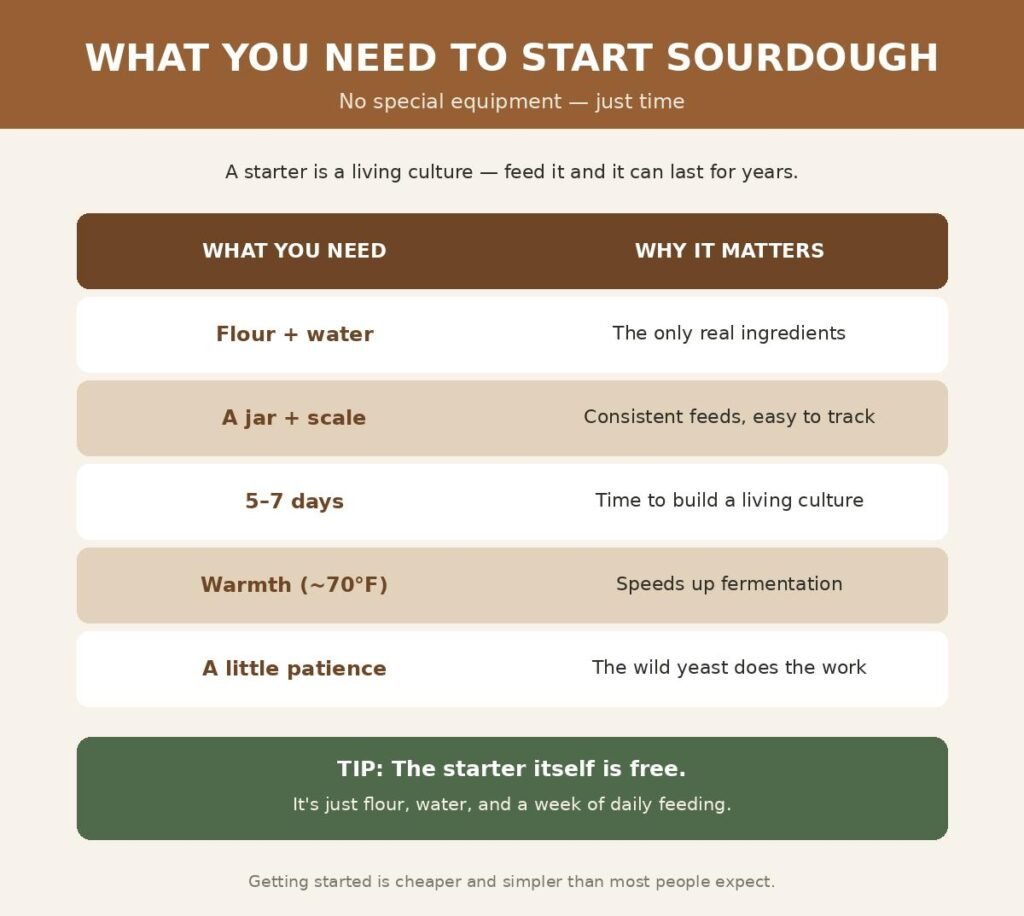
Surprisingly little: flour, water, a jar, a kitchen scale, and about a week of patience. The heart of it is the starter, a living culture of wild yeast and bacteria you build yourself by mixing flour and water and feeding it daily until it’s bubbly and active. No packet yeast, no fancy gear required.
What it takes to begin less than most people expect.
Building that starter is the one step worth doing carefully, because everything else depends on it. This clear walkthrough on how to make sourdough starter takes you from day one through a bubbling, bake-ready culture, including the daily feeding rhythm and how to tell when it’s ready.
How long until you bake your first loaf?
Plan on about 7–10 days from scratch roughly a week to build an active starter, then a day for mixing, fermenting, and baking your first loaf. After that, each loaf is an overnight-plus-morning affair rather than a from-zero project, because your starter is already alive and waiting.
Once you’re established, the ongoing time is modest: a quick feed, a mostly hands-off fermentation, and the bake. It slots into a normal week far more easily than the initial build suggests.
Does sourdough fit a busy, design-forward home?
Yes, a starter lives happily on the counter and, kept in an attractive jar, even looks the part in a well-styled kitchen. Most of the process is passive waiting rather than active work, so it flexes around a full schedule. The bake itself is the only truly hands-on window, and that can land whenever suits you.
If anything, sourdough rewards a kitchen you actually enjoy being in. It’s one more reason to invest in thoughtful kitchen design: good light, clear counter space, and a spot for the starter to turn baking from a chore into a pleasure. Just like growing the best edible plants for a small balcony, it brings a touch of fresh, home-grown utility into your daily lifestyle.
Frequently Asked Questions
Do you need a special starter to bake sourdough? Now you can build your own starter from just flour and water in about a week. You don’t need to buy one or get a “family” starter passed down, though those work too. Homemade cultures are how every sourdough tradition began.
Is homemade sourdough healthier than store bread? Many people find it easier to digest thanks to the long fermentation, and it typically contains just flour, water, and salt no additives. It’s not a magic health food, but it’s a simple, wholesome loaf you control completely.
How much does it cost to start baking sourdough? Very little essentially the price of a bag of flour. The starter is free to make, and you likely already own a jar and a bowl. A kitchen scale is the one worthwhile upgrade for consistent results.