Polygraph Test: The Hidden Secrets Revealed
Most people think they understand a polygraph test. You sit in a chair, answer a few questions, and the machine magically knows if you’re lying. Simple, right?
Not exactly.
The reality is a lot messier, more human, and honestly, more interesting. Polygraph tests sit in this strange space between science, psychology, and performance. And once you look a little closer, you start to see why they’re both trusted and criticized at the same time.
Let’s break it down in a way that actually makes sense.
What a Polygraph Test Really Measures
Here’s the first thing that surprises people: a polygraph doesn’t detect lies.
It detects physiological changes.
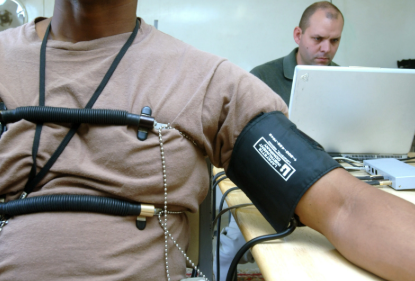
That means things like your heart rate, breathing patterns, blood pressure, and skin conductivity. When you’re hooked up to the machine, it’s basically watching how your body reacts while you answer questions.
Now, the assumption behind all of this is pretty straightforward. When people lie, they tend to feel stress or anxiety. That stress shows up in the body. The machine records it. The examiner interprets it.
But here’s where things get tricky.
Not everyone reacts to lying the same way. Some people get nervous telling the truth. Others can lie without breaking a sweat. So the test isn’t really about truth vs. lies—it’s about how your body behaves under pressure.
That distinction matters more than most people realize.
The Human Element Nobody Talks About
A polygraph test isn’t just a machine doing its thing. There’s always an examiner involved, and their role is bigger than it seems.
Before the test even begins, there’s usually a pre-test interview. This part can last a while. The examiner asks questions, builds rapport, and explains how the process works. On the surface, it feels routine.
But it’s not just setup.
This phase is where the examiner starts reading you. Your tone, your body language, how you respond to certain topics—it all gets noticed. Think of it less like a medical procedure and more like a conversation with someone trained to spot inconsistencies.
Here’s a simple example.
Imagine someone being asked about a missing item at work. During the pre-test, they casually mention the situation and seem relaxed. But when a specific detail comes up—say, who had access to the office—their tone shifts slightly. Maybe they hesitate. Maybe they over-explain.
That moment sticks.
By the time the actual test begins, the examiner already has a mental map of where the “interesting” areas are.
Why Some Truthful People Fail
This is where things get uncomfortable.
People assume that if you’re telling the truth, you’ll pass. That’s not always the case.
Let’s say someone is naturally anxious. Maybe they hate being judged, or they’ve never been in a high-pressure situation like this before. Sitting in a quiet room, wired to a machine, being asked serious questions—it’s enough to make anyone nervous.
Now their heart rate spikes. Their breathing changes. The machine records it.
From the outside, those signals can look like deception.
It’s not hard to see how things can go sideways.
There are real-world cases where people failed polygraph tests despite later being proven truthful. That’s one reason why polygraph results are often not admissible in court in many places.
So if the test isn’t foolproof, why do people still use it?
Why Polygraph Tests Are Still Used
Despite all the criticism, polygraph tests haven’t disappeared. In fact, they’re still widely used in certain fields.
Law enforcement agencies use them during investigations. Intelligence agencies rely on them for security screenings. Even some private employers use them in limited situations.
The reason is simple: they’re useful—but not in the way most people think.
A polygraph isn’t just about catching lies. It’s about creating pressure.
When someone believes the machine can expose them, they’re more likely to reveal information voluntarily. Sometimes it happens during the test. Sometimes it happens right after.
There’s a kind of psychological leverage at play.
Picture this: someone goes in thinking they can “beat” the test. Midway through, the examiner pauses and says something like, “Your responses are showing some inconsistencies here.”
That moment alone can be enough to crack someone who’s hiding something.
They start talking. Not because the machine proved anything, but because they think it did.
Can You Beat a Polygraph Test?
This question comes up all the time, and the honest answer is… kind of.
There are techniques people claim can help. Controlling breathing, creating physical discomfort at certain moments, mentally reframing questions—these strategies are often discussed online.
But here’s the thing: it’s not as easy as it sounds.
Examiners are trained to spot unnatural patterns. If your responses look too controlled or inconsistent in a suspicious way, that raises its own red flags.
Plus, trying to manipulate your own physiological responses while staying calm and answering questions naturally is harder than most people expect.
Think about it. You’re already under stress. Now you’re adding another layer of mental effort on top of that.
It’s like trying to act casual while solving a math problem in your head during a job interview.
Some people might pull it off. Most won’t.
The Role of Control Questions
One of the more interesting parts of a polygraph test is something called “control questions.”
These aren’t directly related to the issue being investigated. Instead, they’re designed to create a baseline for your reactions.
For example, you might be asked something like, “Have you ever lied to get out of trouble?”
Almost everyone has. And most people will feel at least a little uneasy answering it, even if they say “no.”
The idea is to compare your reactions to these general questions with your reactions to the specific questions being investigated.
If your response spikes more on the relevant questions, that might suggest deception.
But again, it’s not perfect.
Some people react strongly to the control questions instead. Others don’t react much at all to anything. Human psychology isn’t neat or predictable, and the test reflects that.
What It Feels Like to Take One
If you’ve never taken a polygraph test, it’s hard to picture what it’s actually like.
It’s quieter than you’d expect.
You’re sitting still, connected to sensors. The examiner asks questions in a calm, steady voice. There’s no dramatic music, no flashing lights—just a slow, deliberate process.
And yet, it can feel intense.
Every question feels loaded, even when it isn’t. You start thinking about how you sound, how you’re breathing, whether you’re moving too much.
“Am I overthinking this?” becomes a constant loop.
Even small things can feel amplified. A slight pause before answering. A shift in posture. A moment of uncertainty.
That internal pressure is part of the experience.
The Gray Area Between Truth and Lies
Here’s something people don’t talk about enough: not all lies are clear-cut.
What about half-truths? What about things you genuinely don’t remember clearly? What about situations where your perception of events differs from someone else’s?
A polygraph test doesn’t handle those gray areas very well.
Let’s say someone is asked, “Did you take the missing file?”
Maybe they didn’t physically take it, but they did move it earlier and forgot. Now they’re unsure. Their answer might be technically truthful, but their uncertainty creates stress.
The machine picks that up.
Was that deception? Or just confusion?
This is where the limitations of the test become obvious. Human memory and intention aren’t always clean and simple.
So, Should You Trust a Polygraph Test?
It depends on what you expect from it.
If you see it as a definitive lie detector, you’ll probably be disappointed. It’s not that reliable.
But if you see it as a tool that can add pressure, encourage honesty, and provide additional insight during an investigation, it makes more sense.
It’s one piece of a much bigger puzzle.
And like any tool, its effectiveness depends on how it’s used—and how its results are interpreted.
The Takeaway
Polygraph tests aren’t magic, and they’re not meaningless either. They sit somewhere in the middle, shaped by both science and human behavior.
They measure stress, not truth. They rely on interpretation, not certainty. And they work as much on the mind as they do on the body.
That’s the hidden part most people miss.
If you ever find yourself facing one, the most important thing to understand is this: it’s not just about what you say. It’s about how you experience the moment.
And that’s something no machine can fully decode.