Minimalist Camping in the Appalachians: A Weight-Reduction Guide
The Appalachian Trail is 2,190 miles, Georgia to Maine. Most people don’t hike the whole thing obviously. Day hikers and weekend campers do sections throughout Virginia, North Carolina, Tennessee. The terrain’s all over the place – rocky climbs, stream crossings, exposed ridges.
Less weight in your pack makes everything easier. That’s just how it works.
This guide is about cutting pack weight for multi-day camping in the Appalachians. Not ultralight thru-hiking where people cut their toothbrush in half. Just practical stuff that actually improves your trip without spending a fortune on titanium gear.
Base Weight Matters
Base weight is everything in your pack except consumables – food, water, fuel.
Typical beginner base weight is like 25-30 lbs. Experienced campers get down to 15-20 lbs. Ultralight people go under 10 lbs but that’s a whole different thing.
Even cutting 5 pounds changes how you feel after hiking 8 miles. Your knees notice it. Shoulders notice it. How tired you are at camp definitely notices.
The Appalachians aren’t technical mountain climbing or anything, but the elevation gain adds up fast. Hiking from Clingmans Dome parking lot to the summit is 330 feet in half a mile. Do that kind of thing repeatedly all day and extra weight just wears you down.
The Seating Problem
Most people bring folding chairs camping. Those Coleman camp chairs weigh 3-4 pounds. Way too heavy for backpacking, but people still bring them because sitting on logs or rocks for hours sucks.
Better option is collapsible stools that actually telescope.
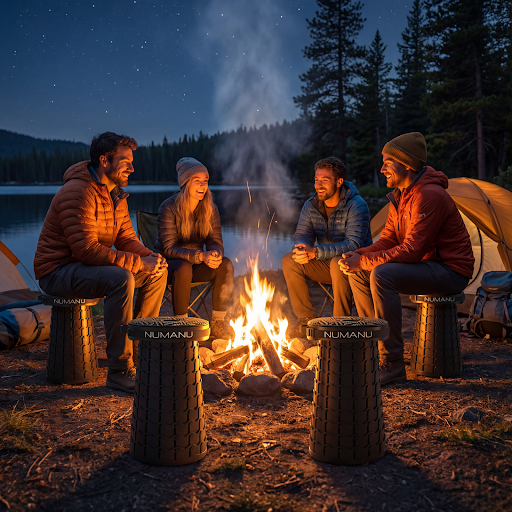
NUMANU makes two versions of their Standard model:
Option 1: Just the Stool
- Weight: 2.2 lbs
- Folds down to: 2.5 inches
- Height goes from: 2.5 to 18 inches
- Holds: 620 lbs
Option 2: The Complete Set
- Weight: 2.2 lbs for stool + 10 oz for cushion bag (total: 2.8 lbs)
- Comes with: 3-in-1 cushion carry bag that has a drink holder
- Same stool as Option 1
Both on Amazon or NUMANU’s website. Includes lifetime warranty.
Just the Stool
Good parts:
- Lightest option at 2.2 lbs total
- Clips right to your pack with a carabiner
- Nothing extra to deal with
- Super fast to set up and pack away
- Takes up almost no space
Not so good:
- You’re sitting on hard plastic (no cushion)
- No place to store small stuff
- No drink holder at camp
Who it’s for: People who care most about weight. If you’re doing big mileage days where every ounce counts. Campers who don’t mind sitting on a firm surface.
The Complete Set
Good parts:
- That 3-in-1 bag does multiple things – cushion, carry case, drink holder
- Way more comfortable for sitting a long time
- Bag keeps your stool protected when you’re hiking
- Drink holder’s actually useful at camp for coffee or water bottle
- Can use the bag to store little things like your headlamp or snacks when you’re not using it as a cushion
Not so good:
- Adds weight from the bag and cushion
- Bit more bulk when everything’s packed
- One more thing to keep track of at camp
- Bag gets dirty and wet, gotta deal with that
Who it’s for: Weekend campers who care more about comfort than shaving ounces. Planning to spend time at camp cooking or reading. People who like gear that does multiple jobs.
How They Compare to Other Options
Coleman camp chair weighs 4.2 lbs, around $80
Helinox Chair Zero weighs 1.1 lbs, around $120
NUMANU just the stool: 2.2 lbs, around $20
NUMANU complete set: 2.8 lbs (stool 2.2 lbs + bag 10 oz), around $35
The Helinox is lighter but costs way more, doesn’t adjust height, and you get no storage. For Appalachian camping where you’re moving around a lot, the NUMANU options work better for most people.
Height Adjustment (Both Options Have This)
Going from 2.5 to 18 inches means you can use it for different things:
Low setting (2.5-10 inches) – good for when you’re cooking on the ground or organizing your gear on a tarp
Medium (10-15 inches) – eating meals, doing camp stuff at a normal sitting height
High (15-18 inches) – better view of your campsite, comfortable if you’re sitting for a while watching the sunset or whatever
How to Pack Them
Just the stool: Clips to the outside of your pack with a carabiner. Doesn’t take up space inside. You can grab it without even opening your pack.
Complete set: The cushion bag can clip outside or go inside your pack. Some people use the bag as a stuff sack for clothes while hiking, then turn it into the seat cushion at camp. That way the extra weight kind of serves double purpose.
Tested Both on an Actual Trip
Did the Max Patch to Hot Springs section in North Carolina with both setups on different weekends to compare.
Day 1: 8.2 miles, went up 1,800 feet
Day 2: 10.4 miles, 2,100 feet of climbing
Day 3: 6.8 miles, mostly downhill (900 feet)
With just the stool:
- The weight difference was noticeable going uphill
- Setting it up took like 10 seconds whenever I stopped
- Fine for sitting 15-20 minutes during breaks
- After sitting for over an hour at camp that evening, the hard plastic got uncomfortable
With the complete set:
- Honestly didn’t really notice the extra weight while hiking
- The cushion made a big difference for evening camp time when I was sitting around for a while
- Drink holder was useful, didn’t have to keep getting up to grab my water bottle
- The bag kept the stool from getting wet when I crossed a creek
What I’d recommend: If you’re hiking 8+ miles a day and just using camp to sleep, go with just the stool. If you’re doing shorter days and actually spending time at camp – cooking real meals, hanging out, morning coffee – the complete set is worth the tiny bit of extra weight.
Shelter Weight
Weather in the Appalachians changes fast. Afternoon thunderstorms happen all the time from May to September. You need protection from rain.
Regular 2-person tent: 5-7 lbs
Lightweight tent: 2-3 lbs
Tarp setup: 1-2 lbs
The AT has shelters every 8-12 miles in most sections. They’re these three-sided wooden structures with sleeping platforms. Free to use, first-come first-served.
Strategy: Plan your route to hit shelters when you can. Bring a lightweight tarp as backup. Total weight is like 1.5 lbs instead of 5 lbs for a tent.
Downside: Shelters fill up during busy season (March-May going north, July-September for section hikers). So you need a backup plan if they’re full.
Sleep System
Your sleep system is your sleeping bag plus sleeping pad.
Down vs synthetic for the Appalachians:
Down bags are lighter and pack smaller but lose their warmth when wet
Synthetic bags are heavier and bulkier but still keep you warm if they get damp
The Appalachians are humid and it rains a lot, so synthetic makes more sense for most people. Exception would be if you’re really confident about keeping your stuff dry – then down saves you like 8-12 ounces.
Sleeping pad weights:
- Inflatable pads: 12-16 oz
- Foam pads: 8-12 oz
- Self-inflating: 20-32 oz
Foam pads weigh less and can’t pop. Inflatable pads are way more comfortable. Depends on how well you need to sleep.
Cook System
All that elevation in the Appalachians means every ounce matters.
Regular camp stove setup: 2+ lbs
Canister stove like MSR PocketRocket: 2.6 oz
Alcohol stove: 0.5 oz
For weekend trips (2-3 days), canister stoves work great. You can buy fuel in outfitter towns along the AT.
Cook pot size – 900ml works for solo camping. Big enough to boil water for freeze-dried meals, coffee, oatmeal, whatever.
Total cook system: under 1 lb including stove, pot, fuel, and utensils.
Water
The AT has water everywhere. Streams, springs, shelters usually have water nearby.
2 liters of water weighs 4.4 lbs. A lot of people carry too much water, especially in areas where you hit water sources every couple miles.
Water treatment:
- Sawyer Squeeze filter: 3 oz
- Aquamira drops: 3 oz
- Just boiling it: adds no weight
Look at your maps before you go. In Virginia and Tennessee you’ll see water sources every 2-4 miles usually. Means you don’t need to carry 3+ liters.
Clothing Systems
Appalachian weather ranges: 30°F nights to 85°F days (spring/fall)
Layering system:
- Base layer (merino or synthetic)
- Insulation layer (fleece or puffy)
- Shell layer (rain jacket)
- Extra: rain pants, warm hat, gloves
Total: 2-3 lbs depending on season
Many beginners bring too many clothing options. You’ll wear the same outfit multiple days. One extra shirt, one extra pair of socks. That’s sufficient for weekend trips.
Pack Weight Distribution
Even with reduced gear, how you pack matters.
Heavy items (food, water, stove fuel): center of pack, close to back
Medium items (clothes, sleep system): fill remaining space
Light items (first aid, snacks): top and outside pockets
Collapsible stool clips to exterior. Doesn’t affect internal organization.
Real Weight Comparison: Weekend Trip
Traditional setup:
- Tent: 5 lbs
- Sleeping bag/pad: 4 lbs
- Camp chair: 4 lbs
- Cook system: 2 lbs
- Clothing: 3 lbs
- Water (2L): 4.4 lbs
- Food (2 days): 3 lbs
- Misc: 2 lbs
- Total: 27.4 lbs
Optimized setup (stool-only):
- Tarp: 1.5 lbs
- Sleeping bag/pad: 2.5 lbs
- Portable stool: 2.2 lbs
- Cook system: 0.8 lbs
- Clothing: 2 lbs
- Water (2L): 4.4 lbs
- Food (2 days): 3 lbs
- Misc: 1.5 lbs
- Total: 17.9 lbs
Optimized setup (complete set):
- Tarp: 1.5 lbs
- Sleeping bag/pad: 2.5 lbs
- Stool + cushion bag: 2.8 lbs
- Cook system: 0.8 lbs
- Clothing: 2 lbs
- Water (2L): 4.4 lbs
- Food (2 days): 3 lbs
- Misc: 1.5 lbs
- Total: 18.5 lbs
Difference (traditional vs stool-only): 9.5 lbs
Difference (traditional vs complete set): 8.9 lbs
Over 10 miles of hiking with 2,000 feet elevation gain, both optimized setups provide significant weight reduction. The 0.6 lb difference between configurations is negligible for most hikers.
Appalachian-Specific Considerations
Elevation changes: The AT isn’t flat. Georgia to North Carolina sections include steep climbs. Max Patch to Hot Springs = continuous elevation changes. Lower weight = less fatigue.
Humidity: Appalachian summers are humid. Gear gets damp. Lighter packs dry faster at camp.
Resupply towns: Damascus VA, Hot Springs NC, Franklin NC all have outfitters. Can resupply instead of carrying 5+ days of food.
Shelter availability: Unlike Western trails, the AT has built infrastructure. Use it to reduce tent weight.
Test Before Long Trips
Recommendations for first-time minimalist approach:
- Do overnight trip with reduced gear
- Identify what you actually use vs what stays in pack
- Eliminate unused items for next trip
- Gradually optimize over multiple trips
Don’t immediately cut to ultralight. Reduce incrementally. Learn your personal requirements.
Additional Resources
Appalachian Trail Conservancy (appalachiantrail.org): Shelter locations, water sources, trail conditions
Guthook app: GPS trail guide with real-time updates from hikers
WhiteBlaze forums: AT-specific hiking community
Most active AT sections for weekend camping:
- Grayson Highlands, VA
- Max Patch, NC
- Roan Highlands, NC/TN
- McAfee Knob, VA
All offer good water access, shelter options, and scenic camping.
Conclusion
Cutting weight for Appalachian camping doesn’t mean buying a bunch of expensive ultralight gear. It’s more about using stuff that does multiple jobs, getting rid of things you don’t actually need, and using the shelters and infrastructure that’s already on the trail.
A 2-3 lb portable seat beats carrying around 4-5 lb camp chairs. The height adjustment adds usefulness without making it heavier.
Try one weekend trip with lighter gear. See what you actually use versus what just sits in your pack. Get rid of the stuff you didn’t touch. Do it again next trip.
You’re not trying to impress other hikers with how little your pack weighs. You’re just trying to have a better time on the trail without being as tired and sore.