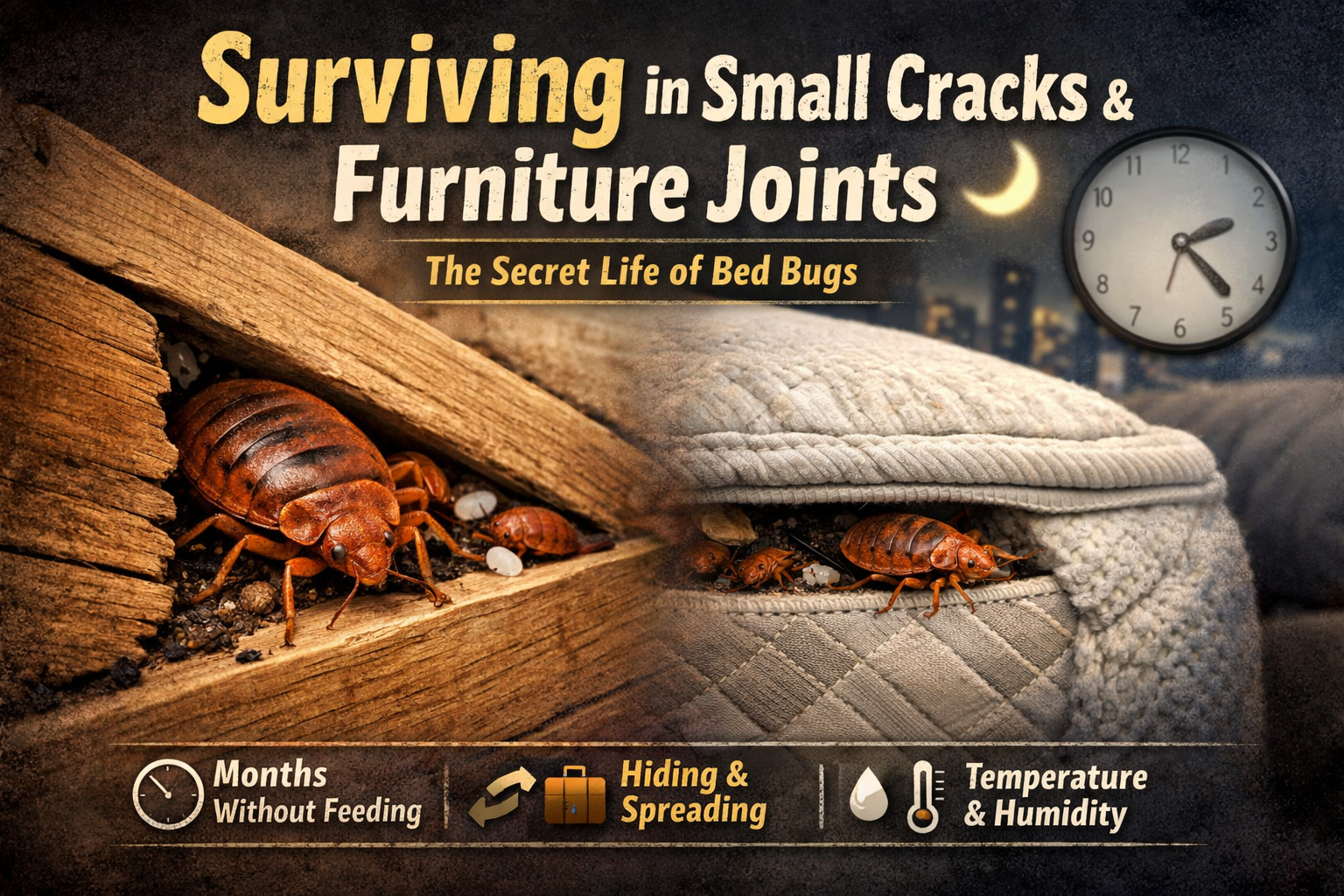
How do bed bugs survive in small cracks and furniture joints?
Bed bugs are notorious for their ability to hide and thrive in the tiniest spaces within homes, particularly in small cracks and furniture joints. Their elusive nature makes them difficult to detect and even harder to eliminate, often leading to persistent infestations. These tiny insects have evolved unique adaptations that allow them to squeeze into narrow crevices, avoid detection, and survive for extended periods without feeding. Understanding how bed bugs manage to persist in such challenging environments is crucial for effective control and prevention. This article delves into the fascinating survival strategies of bed bugs and offers insights into why they are so resilient in household settings.
How bed bugs hide and thrive
Physical adaptations for tight spaces
Bed bugs possess remarkable physical characteristics that enable them to survive in extremely confined spaces. Their bodies are flat and oval-shaped, allowing them to slip into cracks as thin as a credit card. This flattened body structure is especially advantageous when they seek refuge in the seams of mattresses, behind baseboards, or within the joints of furniture. Bed bugs also have flexible exoskeletons, which means they can compress themselves even further when necessary. This flexibility not only helps them evade detection but also protects them from being crushed when furniture is moved or cleaned. Their small size, typically around five to seven millimeters in length, makes it easy for them to remain hidden during the day, emerging only at night to feed. These physical adaptations are key to their survival, as they allow bed bugs to exploit nearly any crack or crevice in a home, making eradication a significant challenge for homeowners and pest control professionals alike.
Behavioral strategies for survival
Beyond their physical traits, bed bugs exhibit behaviors that enhance their ability to survive in small cracks and furniture joints. They are nocturnal, preferring to come out at night when humans are asleep and less likely to notice their presence. This behavior reduces the risk of being seen and increases their chances of feeding successfully. Bed bugs are also highly sensitive to changes in their environment, such as vibrations or shifts in temperature, which can signal the approach of a potential threat. When disturbed, they quickly retreat to their hiding spots, making them difficult to catch. Additionally, bed bugs are adept at finding new hiding places if their current refuge becomes unsafe. This adaptability is one reason why infestations can spread rapidly throughout a home. For those seeking bed bug treatment Overland Park, understanding these behavioral patterns is essential for targeting the pests where they are most likely to hide and ensuring a more effective response.
Feeding habits and survival without food
One of the most remarkable aspects of bed bug biology is their ability to survive for long periods without feeding. Adult bed bugs can live for several months without a blood meal, while nymphs, or juvenile bed bugs, can survive for weeks. This resilience is due to their slow metabolism and the ability to enter a state of dormancy when food is scarce. Bed bugs typically feed every five to ten days when a host is available, but in the absence of a host, they can wait patiently in their hiding spots until an opportunity arises. This ability to endure extended periods without nourishment allows them to persist in empty homes or vacant rooms, only to reemerge when new occupants arrive. Their feeding habits are closely tied to their survival in small cracks and furniture joints, as these locations provide both protection and proximity to sleeping humans, their preferred food source. The combination of patience and persistence makes bed bugs formidable pests that are difficult to eliminate once they have established themselves in a home.
Why furniture joints are ideal hiding spots
Furniture joints offer bed bugs the perfect combination of shelter and access to hosts. The small gaps and seams found in bed frames, couches, and chairs provide ample hiding places that are difficult to inspect and treat. These joints are often overlooked during routine cleaning, allowing bed bugs to remain undisturbed for long periods. The proximity of furniture to sleeping or resting humans also increases the likelihood of successful feeding. Bed bugs are attracted to the carbon dioxide and body heat emitted by humans, and furniture joints place them within easy reach of their next meal. Additionally, the structure of furniture often includes multiple layers and materials, such as wood, fabric, and padding, which create complex hiding environments. This complexity makes it challenging to detect and remove all bed bugs during treatment, contributing to the persistence of infestations. Understanding why furniture joints are such attractive hiding spots is crucial for developing effective control strategies and preventing future infestations.
Bed bug movement and spreading
Bed bugs are not only skilled at hiding but also at moving between different areas of a home. They can travel through wall voids, electrical outlets, and along pipes to reach new hiding spots or find new hosts. This mobility allows them to spread quickly from room to room, especially in multi-unit buildings like apartments or hotels. Bed bugs are also known to hitchhike on clothing, luggage, and furniture, which can lead to the introduction of infestations in new locations. Their ability to move undetected is a significant factor in the rapid spread of bed bug problems. Once established in one area, bed bugs can quickly colonize adjacent rooms or units, making early detection and intervention critical. The movement patterns of bed bugs highlight the importance of thorough inspections and comprehensive treatment plans that address all potential hiding places, not just those in immediate proximity to the initial infestation.
The role of temperature and humidity
Temperature and humidity play important roles in the survival and reproduction of bed bugs. These pests thrive in warm environments, with optimal temperatures ranging from 70 to 80 degrees Fahrenheit. High humidity levels also support their development, as bed bugs are susceptible to dehydration. In cooler or drier conditions, bed bugs may become less active and their development may slow, but they can still survive for extended periods by entering a dormant state. This adaptability allows bed bugs to persist in a variety of environments, from heated homes to unoccupied buildings. Temperature fluctuations can also influence bed bug behavior, prompting them to seek out warmer or more humid hiding spots within a home. Understanding the impact of environmental conditions on bed bug survival can inform control strategies, such as using heat treatments or dehumidifiers to make the environment less hospitable for these pests.
Quick facts about bed bug resilience
Bed bugs can survive for months without feeding, making them incredibly resilient pests. Their flat bodies allow them to hide in cracks as thin as a credit card, and they can quickly adapt to changes in their environment. These traits make bed bugs difficult to eliminate and contribute to the persistence of infestations in homes and businesses.
Conclusion
Bed bugs have evolved a range of physical and behavioral adaptations that enable them to survive and thrive in small cracks and furniture joints. Their flat, flexible bodies allow them to hide in the tiniest spaces, while their nocturnal habits and sensitivity to environmental changes help them avoid detection. Bed bugs can survive for long periods without feeding, making them particularly challenging to eradicate once they have established themselves in a home. Furniture joints provide ideal hiding spots, offering both protection and proximity to human hosts. The ability of bed bugs to move between rooms and adapt to different environmental conditions further contributes to their resilience. Effective control requires a thorough understanding of these survival strategies and a comprehensive approach to treatment and prevention. By recognizing the unique challenges posed by bed bugs, homeowners can take proactive steps to protect their living spaces and reduce the risk of infestation.