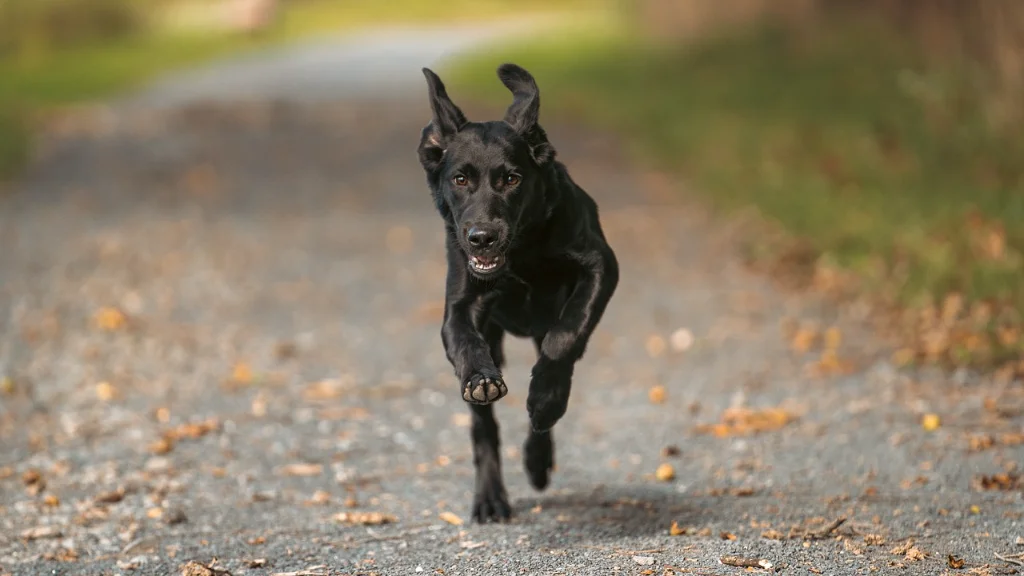
How Fast Can a Lab Run? A Guide to Their Speed
Labrador retrievers are the quintessential family dog, often pictured lounging on a porch or gently carrying a tennis ball. However, one thing many owners quickly notice is how fast these dogs can move when they get excited.
Whether chasing a tennis ball, racing across a yard, or running alongside their owners on a trail, Labradors show impressive speed for their size. Understanding how fast a Lab can run helps potential owners decide whether the breed fits their lifestyle.
How Fast Can a Lab Run on Average?
Most healthy adult Labrador retrievers can reach speeds between 20 and 30 miles (32 to 48 kilometers) per hour in short bursts. You will usually see this during sprints, such as when they chase a toy, race another dog, or sprint across a yard during play.
For longer runs, Labradors typically maintain 8 to 12 miles (13 to 19 kilometers) per hour over steady distances. This moderate but sustainable pace is why many runners consider Labs reliable jogging partners. Their balanced build allows them to combine speed with endurance rather than relying purely on short, explosive bursts.
Overall, Labradors combine quick acceleration with solid endurance. This athletic balance helps them perform well in activities such as agility training, hiking, retrieving games, and field trials where both speed and stamina matter.
Why Labradors Are Such Strong Runners
Labs are athletes by design. They were originally bred as sporting dogs that retrieved waterfowl for hunters, so speed and endurance were essential. Several physical traits contribute to their running ability.
- Deep Chest and Strong Heart: Labradors have a deep chest that supports large lungs and a powerful heart, allowing oxygen to reach their muscles during bursts of speed.
- Muscular Hindquarters: Much of a Lab’s power comes from the back legs. Their strong thighs generate the force needed for quick acceleration.
- Webbed Paws: Labradors have slightly webbed feet that help with swimming, but they also provide stability and traction when running.
- Otter Tail for Balance: The breed’s famous “otter tail” helps with balance and direction when making quick turns.
These physical traits work together to make Labradors strong, capable runners that can accelerate quickly and stay active during long play sessions or outdoor activities.
Factors That Affect How Fast a Lab Can Run
Not every Labrador runs at the same speed. Several factors influence how quickly an individual dog can move.
- Age: Young adult Labradors tend to be the fastest. Puppies lack coordination, while senior dogs usually slow down as they age.
- Weight and Body Condition: Labs that maintain a healthy weight generally move faster and with better agility.
- Fitness and Exercise Routine: Dogs that regularly run, hike, or play fetch develop stronger muscles and better endurance.
- Genetics and Breeding Line: Some Labradors come from working or field lines that are naturally more athletic than show-line dogs.
- Surface and Environment: Terrain can affect running speed. Grass or dirt often provides better traction than pavement or sand.
Together, these factors determine how quickly a Labrador can move, which is why two dogs of the same breed may show very different running abilities.
Exercise Needs for a Labrador Retriever
You cannot keep a Lab cooped up in an apartment all day. These are high-energy animals that require consistent exercise to stay healthy. Most adult Labs benefit from at least one to two hours of activity each day. This can include walks, running, swimming, fetch sessions, or structured training exercises.
Daily activity supports both physical health and mental stimulation. Without enough exercise, Labradors may become bored or restless, which can lead to chewing, digging, or excessive barking.
If you are a runner, a Lab is a perfect partner. They can easily keep up with a 10-minute mile pace for several miles. Just watch the temperature. Labs have thick coats and can overheat quickly in the summer. Run in the early morning or late evening when it’s cool.
Understand How Fast a Lab Can Run Before Bringing One Home
So how fast can a lab run? Labrador retrievers combine strength, endurance, and enthusiasm for activity, which is why they can reach speeds close to 30 miles per hour. This athletic ability reflects the breed’s working heritage and natural drive to move.
They do best in homes where they receive regular exercise. Families who enjoy outdoor activities such as hiking, jogging, or playing fetch often find that a Lab fits naturally into their routine.
Living with a Labrador means embracing an active routine. Their speed and stamina are part of what makes them such engaging companions. If you are considering the breed, we recommend exploring Labrador retriever adoption options to learn what caring for an active dog involves. Many shelters and rescues have energetic Labs looking for homes that can match their lifestyle.